
Frequently Asked Questions for International Buyers in Paris
Buying property in Paris is very different from purchasing real estate in North America. There is no centralized MLS, buyer representation is not standard, and the process is governed by strict legal steps handled by a notaire.
This FAQ is designed for English-speaking and international buyers—particularly those relocating from the United States, Canada, or abroad—who want clear, reliable answers before entering the Paris property market.
With independent buyer representation, SHOKO provides structure, clarity, and full access to the Paris real estate market, helping you move forward with confidence at every stage of your purchase.



Buying property in France starts with three practical questions: can you fund the full purchase, does the property suit your intended use, and do you understand the commitments before signing? Foreigners can generally buy French homes, but ownership does not grant residency, financing is not automatic, and the notaire’s legal checks do not replace a technical inspection.
This guide answers 76 questions for international buyers, including Americans, Canadians, and nonresidents. It covers searching across France’s fragmented listing market, buyer representation, mortgages, contracts, costs, inspections, and long-term ownership, with detailed guidance for Paris apartments.
Whether you want a permanent home, a pied-à-terre, or an investment, start with an all-in budget and a clear search brief. SHOKO helps buyers bring structure to that process and coordinate with the professionals needed for their purchase.
Schedule a private consultation to discuss your location, budget, intended use, and timing.
Updated 11 October 2026. This guide concerns residential purchases and provides general information. Your notaire and qualified tax, financing, immigration, and technical advisers should confirm the rules for your transaction.
No question matches your search. Try another word, or ask SHOKO directly.
Understanding the French Property Market
- How is the French real estate market different from North America?
- Why can finding property in Paris be particularly challenging?
- Are all properties for sale in Paris advertised online?
- Why do the same properties sometimes appear with different agencies?
- Is Paris real estate a good long-term investment?
- Which types of properties are available in France?
1How is the French real estate market different from North America?
France has large property portals and shared professional networks, but no single comprehensive MLS covering the whole residential market. Listings are spread across agencies, portals, notaires, private networks, and direct sellers. North American listing systems also vary by region; the useful distinction is that a French search usually needs several sources.
A structured search brings those sources together, identifies duplicates, and checks which properties are genuinely available. Asking prices alone do not establish market value: compare recent sales, condition, location, and building characteristics.
Copy link to this answer2Why can finding property in Paris be particularly challenging?
Paris is a densely developed city with a limited supply of properties in many desirable neighborhoods.
Apartments vary considerably in layout, natural light, floor level, building condition, energy efficiency, and access to elevators.
Two apartments located on the same street may have very different market values because of their condition, orientation, floor level, and building characteristics.
Additionally, attractive properties can receive considerable interest, requiring buyers to act promptly without sacrificing due diligence.
For international buyers, language differences and unfamiliar transaction procedures can create additional challenges.
Copy link to this answer3Are all properties for sale in Paris advertised online?
No. Although major French property portals provide access to many listings, they do not necessarily represent the entire market.
Some properties are marketed through agency networks, professional contacts, or private introductions before appearing on public platforms.
These opportunities are sometimes described as off-market properties.
However, off-market does not automatically mean undervalued or exclusive. Buyers should evaluate every property using the same financial and legal standards, regardless of how it is marketed.
Copy link to this answer4Why do the same properties sometimes appear with different agencies?
French property owners may authorize several agencies to market the same property through nonexclusive sales mandates.
As a result, the same apartment may appear on different websites, occasionally with different photographs, descriptions, or asking prices.
An organized search helps identify duplicate listings and clarify which agency is responsible for a particular viewing or transaction.
Copy link to this answer5Is Paris real estate a good long-term investment?
A Paris property can suit a long-term lifestyle or investment plan, but neither appreciation nor rental returns are guaranteed. Compare the full acquisition and ownership costs with your expected use and holding period.
Property is less liquid than savings or many listed investments. Transaction costs, repairs, taxes, financing, vacancy, and currency movements can offset gains. If you may need to sell quickly, model that possibility before buying. For an investment purchase, assess net income after costs and confirm that the intended rental use is lawful.
Copy link to this answer6Which types of properties are available in France?
France offers a wide variety of residential properties, including:
Traditional Parisian apartments
Haussmannian residences
Modern apartments and newly constructed homes
Historic townhouses and hôtels particuliers
Countryside houses and farmhouses
Coastal residences
Village properties
Luxury villas and estates
Renovation opportunities
Property types, construction standards, ownership arrangements, and market conditions vary significantly between regions.
Copy link to this answerForeign Ownership and International Buyers
- Can foreigners buy property in France?
- Do I need to live in France to purchase property?
- Does buying property in France give me residency or citizenship?
- Can I purchase property in France without speaking French?
- Can Americans and Canadians purchase property in Paris remotely?
- Can I buy a property in France as a second home?
- Can I purchase property in France through a company or SCI?

7Can foreigners buy property in France?
Yes. France generally allows foreign nationals to purchase residential property regardless of nationality.
Americans, Canadians, British citizens, and buyers from many other countries can purchase French property without being French residents.
However, financing availability, tax obligations, international banking requirements, and certain regulatory restrictions may differ depending on the buyer's circumstances.
Copy link to this answer8Do I need to live in France to purchase property?
No. Nonresidents can generally purchase French residential property.
Many international buyers acquire second homes, holiday residences, retirement properties, or investment properties while continuing to live abroad.
The ownership process can be organized around the buyer's location, although certain administrative and identity-verification requirements must still be satisfied.
Copy link to this answer9Does buying property in France give me residency or citizenship?
No. Buying a home does not grant French residency, a long-stay visa, permanent residence, or citizenship. Ownership and permission to stay are separate matters.
Americans and Canadians planning an extended stay must check the immigration route that fits their circumstances. Do not plan a permanent move solely around a property purchase. Consult France Visas — long stay visas.
Copy link to this answer10Can I purchase property in France without speaking French?
Yes. However, legal documents, property diagnostics, condominium records, and official correspondence are generally prepared in French.
International buyers should ensure they fully understand the documents they are signing.
Depending on the transaction, a qualified translator or interpreter may be necessary or advisable.
An English-speaking property advisor can also help coordinate communications with agencies, notaires, financing professionals, and other service providers.
Copy link to this answer11Can Americans and Canadians purchase property in Paris remotely?
Yes, subject to the practical and legal requirements of the transaction.
Many stages can be coordinated remotely, including:
Initial property research
Agency communications
Video viewings
Property comparisons
Negotiation discussions
Document reviews
Financing coordination
Certain legal acts may be completed using authorized electronic procedures or through a properly established power of attorney.
The notaire determines which signing arrangements are legally acceptable for the particular transaction.
Copy link to this answer12Can I buy a property in France as a second home?
Yes. International buyers frequently purchase French residences for seasonal use, holidays, family visits, or future retirement.
Before purchasing, buyers should evaluate annual ownership costs, insurance requirements, local taxes, property management, and the practicalities of maintaining a residence while living abroad.
Second homes may also be subject to different local tax treatment from primary residences.
Copy link to this answer13Can I purchase property in France through a company or SCI?
In certain circumstances, yes.
A French Société Civile Immobilière (SCI) is a legal structure sometimes used to hold property, particularly for family ownership or estate-planning purposes.
However, an SCI is not automatically more tax-efficient or appropriate for every international buyer.
Its suitability depends on ownership objectives, financing, taxation, succession planning, and the buyer's country of residence.
Specialist legal and tax advice is essential before selecting this structure.
Copy link to this answerBuyer Representation and Working with SHOKO
- What is a buyer's agent in France?
- Why should I use an independent buyer's agent in Paris?
- Does a listing agent represent the buyer or seller in France?
- Can a buyer's agent search properties listed by other agencies?
- How much does a buyer's agent charge in France?
- Who pays SHOKO's buyer-agent commission in France?
- What is a buyer representation agreement in France, and why must I sign one?
- Can a buyer's agent help negotiate the purchase price?
- What makes SHOKO's approach different?

14What is a buyer's agent in France?
A buyer’s agent, often called a chasseur immobilier or chasseur d’appartement, helps a purchaser search for and acquire property under an agreed mandate. Services may include research, screening, viewings, price comparisons, negotiation support, and transaction coordination.
In France, regulated transaction work must be carried out within the appropriate professional authorization framework. Ask who holds the professional transaction card, whether a representative acts under an authorized cardholder, and what insurance and mandate apply. An advisory title alone does not establish authorization to perform regulated estate agency activities. See Service Public — real estate agent obligations.
Copy link to this answer15Why should I use an independent buyer's agent in Paris?
An independent buyer's agent can be particularly valuable when buyers are unfamiliar with the local market or cannot personally manage an extensive property search.
Rather than contacting numerous agencies individually, the buyer works through a dedicated professional who helps coordinate the search and evaluate opportunities.
This can save time, reduce duplication, improve communication, and provide greater consistency throughout the purchasing process.
Copy link to this answer16Does a listing agent represent the buyer or seller in France?
Check the mandate. A listing agent usually has a seller’s sales mandate; a buyer’s agent may have a purchaser’s search mandate. These arrangements determine the agreed services and remuneration, but French professional duties should not be assumed to match North American agency law.
Ask who appointed each professional, who pays them, and whether they receive commissions or referral payments from another party. Written disclosure helps you assess potential conflicts and understand what “independent” means in your transaction.
Copy link to this answer17Can a buyer's agent search properties listed by other agencies?
Yes, subject to the scope of the buyer's mandate and cooperation with the relevant listing representatives.
An independent property search is not necessarily restricted to one agency's inventory.
This is especially valuable in Paris, where available properties are distributed across numerous agencies and platforms.
Copy link to this answer18How much does a buyer's agent charge in France?
There is no universal buyer-agent fee. The amount may be a percentage or a fixed sum, depending on the professional and lawful contractual arrangement.
Before signing, request the fee including VAT where applicable, the services covered, any exclusivity, the mandate’s duration and termination terms, who pays, and when payment becomes due. Clarify whether the buyer-agent fee is additional to the selling agency’s commission. For regulated transaction work, payment is subject to French legal requirements as well as the mandate; do not assume an advance search fee is permitted. See Service Public — real estate agent obligations.
Copy link to this answer19Who pays SHOKO's buyer-agent commission in France?
The buyer pays our fee: 2.5% of the agreed purchase price, including VAT at 20%. This fee is stated in your signed buyer representation agreement before we begin your property search.
Buyers familiar with North American real estate may expect the listing brokerage to offer compensation to the buyer’s brokerage. Those arrangements vary, and they should not be assumed to apply in France.
In France, a selling agency’s commission does not automatically include payment for an independently appointed buyer’s agent. Agencies may agree to cooperate or share commission, but there is no guaranteed arrangement covering every property.
SHOKO searches across multiple agencies and property sources rather than limiting your search to one agency’s listings. Our remuneration is therefore agreed directly with you, so our search can follow your requirements without depending on whether a particular selling agency offers commission sharing.
How much will I pay?
Your total buyer-agent fee is calculated as:
Agreed purchase price × 2.5%
The following examples show the VAT already included in that total:
| Purchase price | Fee excluding VAT | VAT at 20% | Total fee payable |
|---|---|---|---|
| €500,000 | €10,416.67 | €2,083.33 | €12,500 |
| €1,000,000 | €20,833.33 | €4,166.67 | €25,000 |
The VAT component is calculated by dividing the total fee by six. It is not calculated by adding another 20% to the advertised 2.5%.
When and how is the commission paid?
Under our agreed completion arrangements, the fee is payable when the purchase completes and the final deed is signed. You provide the funds to the notaire, who settles the fee on your behalf according to the mandate, invoice, and completion instructions.
Our buyer-agent fee is separate from the property price, acquisition costs commonly called “notaire fees,” and any selling-agency commission applicable to the transaction. These amounts should be identified clearly in your purchase budget.
When SHOKO works with a local buyer-agent partner elsewhere in France, we share our fee with that partner. That collaboration does not increase your agreed total buyer-agent fee beyond 2.5%, VAT included.
Any separate commission contribution or sharing arrangement with a selling agency will be disclosed and documented, including whether it changes the amount you pay.
You will know our fee and your payment responsibility before the search begins.
Copy link to this answer20What is a buyer representation agreement in France, and why must I sign one?
In France, a buyer’s property-search agreement is commonly called a mandat de recherche. It is the written agreement that authorizes a professional to search for property on your behalf and defines the terms of that work.
Before SHOKO begins your property search, we require a signed mandate. It establishes what you are asking us to do, the services we will provide, and how we will be paid.
The agreement sets out:
- Your search criteria, preferred locations, and budget.
- The services included and the responsibilities of each party.
- The mandate’s duration and whether it is exclusive or nonexclusive.
- Applicable cancellation, withdrawal, and termination provisions.
- The buyer-agent fee, its calculation basis, and who pays it.
- When the fee becomes payable and how it will be settled.
Our mandate states that the buyer is responsible for a fee of 2.5% of the agreed purchase price, including VAT at 20%, payable at completion under the agreed terms.
Signing the mandate authorizes the agreed search services. It does not oblige you to purchase every property we introduce or replace the separate offer and sale-contract process.
The mandate gives both parties a clear foundation for working together. You understand the services, contractual commitments, and costs before we invest time in research, agency communications, viewings, and purchase coordination.
Have questions about the mandate or commission? Discuss them with SHOKO before signing, so you can begin your search with clear expectations.
Copy link to this answer21Can a buyer's agent help negotiate the purchase price?
Yes. Negotiation assistance may include analyzing comparable properties, identifying relevant defects, reviewing market positioning, and developing an appropriate offer strategy.
However, negotiation should not be based solely on obtaining the largest possible discount.
A successful purchase involves acquiring a suitable property at a defensible price while protecting the buyer's financial and contractual interests.
Copy link to this answer22What makes SHOKO's approach different?
SHOKO focuses on helping international buyers organize a French property search and understand how the purchasing process fits their needs. The approach combines a clear brief, research across several sources, coordinated agency communications, and evaluation of properties against the buyer’s priorities.
The aim is a consistent point of contact, with legal, lending, tax, and technical questions directed to qualified specialists. The agreed services, geographic coverage, mandate, and fees define the support available for your purchase.
Before choosing representation, clarify the mandate, fees, and support you need. Explore buyer advisory services.
Copy link to this answerFrench Mortgages and Financing
- Can Americans and Canadians obtain a mortgage in France?
- How much down payment is required to buy property in France?
- Why is mortgage pre-approval important?
- What documents might French banks request from foreign buyers?
- Can self-employed international buyers obtain French mortgage financing?
- What happens if my mortgage application is rejected?
- What is mortgage insurance in France?
- Should international buyers consider currency exchange rates?

23Can Americans and Canadians obtain a mortgage in France?
Potentially. Some lenders consider American and Canadian nonresident applicants, but eligibility is lender-specific and can change. Nationality, tax residence, income currency, age, existing debt, assets, property use, and documentation all matter. US applicants may face additional account and compliance requirements.
Arrange an assessment before committing to a purchase. Avoid assuming that a strong home-country credit history guarantees a French loan. Review the proposed amount, term, insurance, security, and total cost with the lender or an appropriately authorized mortgage intermediary.
Copy link to this answer24How much down payment is required to buy property in France?
There is no single down-payment percentage applicable to every international buyer.
The amount depends on the lender, the borrower's financial profile, residency status, property type, and current lending policies.
Nonresident buyers may be asked to contribute a larger proportion of the purchase price than certain resident borrowers.
Buyers should also maintain sufficient funds for acquisition costs, insurance, and any planned renovation.
Copy link to this answer25Why is mortgage pre-approval important?
An early financing assessment helps set a workable budget and identify documentation problems before you make an offer. It may also help demonstrate preparedness to a seller.
A broker’s estimate or preliminary bank indication is not a binding loan offer. Approval still depends on underwriting, the property, insurance, and other conditions. A formal French mortgage offer has a separate statutory reflection period: it cannot normally be accepted until the 10-day period has passed. This is distinct from the property contract’s withdrawal period. See Service Public — French mortgage offers.
Copy link to this answer26What documents might French banks request from foreign buyers?
Depending on the lender, applicants may be asked to provide:
Passport and identification
Proof of residence
Tax returns
Employment or business-income records
Bank statements
Evidence of savings and investments
Details of existing loans
Documentation explaining the origin of funds
Information about the property being purchased
Self-employed applicants may need additional financial records.
Copy link to this answer27Can self-employed international buyers obtain French mortgage financing?
Possibly. French lenders often examine the consistency, sustainability, and documentation of self-employed income.
Applicants may need to provide several years of financial statements, tax declarations, and supporting business records.
Eligibility varies, making early discussions with an experienced financing professional especially important.
Copy link to this answer28What happens if my mortgage application is rejected?
Where the purchase is financed by a qualifying mortgage, the preliminary agreement includes a mortgage financing condition. It should accurately describe the borrowing you need, including the amount, term, maximum rate, and deadline.
If a compliant application is refused and the condition fails within its terms, the buyer can generally recover the deposit. Apply promptly, retain refusal evidence, and follow the notaire’s notification instructions. A refusal outside the agreed loan characteristics may not protect you. Do not describe a financed purchase as “cash” merely to strengthen an offer. See Service Public — mortgage financing conditions.
Copy link to this answer29What is mortgage insurance in France?
Assurance emprunteur covers specified borrower risks, commonly death and certain forms of disability or incapacity. Although it is not a universal statutory requirement for every mortgage, lenders commonly make adequate coverage a lending condition.
Compare premiums, exclusions, coverage percentages, age limits, and eligibility alongside the loan’s total cost. Nonresident applicants should check territorial coverage. Ask about using an alternative policy with equivalent guarantees; the cheapest premium may not provide the protection the lender requires.
Copy link to this answer30Should international buyers consider currency exchange rates?
Yes. Buyers whose savings or income are denominated in Canadian dollars, US dollars, British pounds, or other currencies should consider exchange-rate movements.
A change in exchange rates can materially affect the effective purchase price, deposit, monthly payments, and ongoing ownership expenses.
International buyers may benefit from discussing currency transfer timing and costs with a regulated foreign-exchange provider.
Arrange a financing assessment before making an offer. Read our French mortgage guide for Americans and Canadians.
Copy link to this answerThe French Property Purchasing Process
- What are the main steps involved in buying property in France?
- How do I make an offer on a property in Paris?
- Is an accepted offer legally binding in France?
- What is a compromis de vente?
- What is the difference between a compromis de vente and a promesse de vente?
- What is the 10-day cooling-off period in France?
- Is a deposit required when signing the preliminary contract?
- How long does buying property in France take?
- Can I withdraw from a purchase after the cooling-off period?
- When do I officially become the owner?
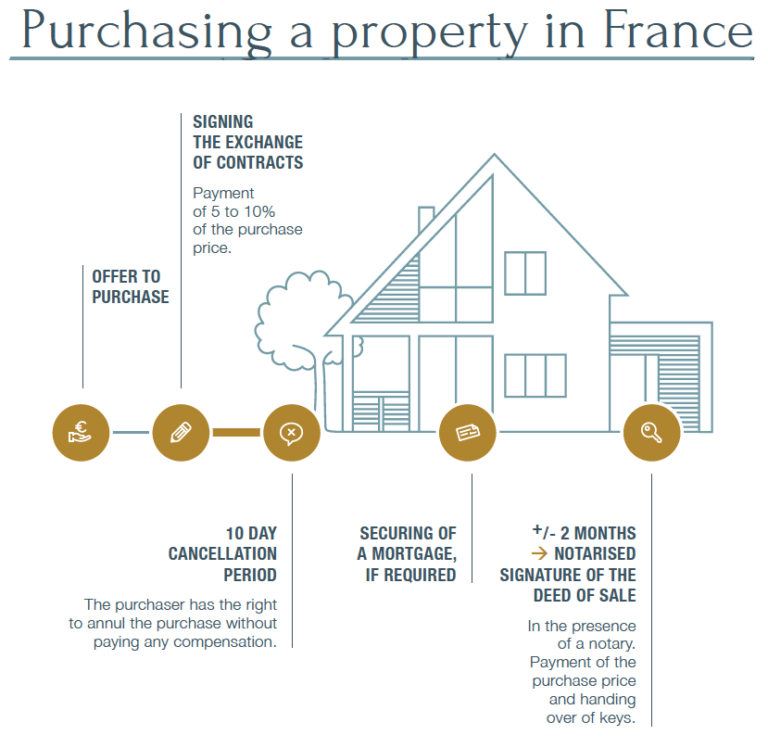
31What are the main steps involved in buying property in France?
For an existing home, the usual sequence is:
Define your intended use, location, budget, and available funds.
Assess financing and appoint the professionals you need.
Search, view, compare prices, and review property documents.
Make an informed offer with clear financing terms.
Ask the notaire to prepare or review the preliminary agreement.
Sign the compromis or promesse and track the applicable withdrawal period.
Complete financing, legal checks, and contractual conditions.
Confirm cleared funds, insurance, the final property condition, and completion arrangements.
Sign the acte authentique de vente and receive possession as agreed.
New-build purchases, occupied properties, and unusual ownership structures can follow different procedures. Read our French property buying process guide.
Copy link to this answer32How do I make an offer on a property in Paris?
A purchase offer normally identifies the property, proposed price, and relevant terms.
It may also specify financing arrangements and a validity period.
Buyers should obtain advice before submitting an offer because an accepted written offer can have legal consequences.
An offer should be based on an informed assessment of the property, rather than urgency or emotional pressure.
Copy link to this answer33Is an accepted offer legally binding in France?
An accepted offer can create legal obligations, depending on its wording and circumstances.
However, an accepted offer is not identical to a signed preliminary sale contract, and the legal protections applicable to residential purchasers must also be considered.
Buyers should avoid assuming that an accepted offer is either automatically unenforceable or equivalent to a completed sale.
Copy link to this answer34What is a compromis de vente?
A compromis de vente is a preliminary sale agreement that generally commits both parties to the transaction, subject to applicable legal protections and contractual conditions.
It normally specifies the purchase price, property details, financing arrangements, important deadlines, and conditions affecting completion.
The agreement is an important legal document and should be reviewed carefully before signature.
Copy link to this answer35What is the difference between a compromis de vente and a promesse de vente?
Both are preliminary contractual arrangements used in French property transactions.
A compromis de vente is generally a bilateral agreement under which both parties commit to the sale.
A promesse unilatérale de vente is structured differently: the seller grants the prospective buyer an option to purchase under agreed conditions and within a specified period.
The legal consequences differ, so buyers should rely on their notaire to explain the agreement being proposed.
Copy link to this answer36What is the 10-day cooling-off period in France?
A nonprofessional purchaser of residential property generally has 10 calendar days to withdraw from a qualifying preliminary contract without giving a reason. The start depends on legally valid notification; for notification by registered letter, it normally begins the day after the letter’s first presentation.
Do not calculate the deadline from the viewing, accepted offer, or signature date alone. Required condominium documents can also affect the start. Ask the notaire to confirm the deadline and approved withdrawal method, including any rule affecting the final day. See Service Public — preliminary sale contracts.
Copy link to this answer37Is a deposit required when signing the preliminary contract?
A deposit or immobilization indemnity is common, often around 5–10% of the price, but the amount and legal treatment depend on the contract. It is credited toward the price on completion; it is not an additional purchase tax.
Have the notaire confirm the payee, authorized holding arrangements, timing, and refund rules. A valid withdrawal or failure of a protective condition may require repayment. Independently verify bank details using a known telephone number before transferring money; do not rely solely on an email containing payment instructions.
Copy link to this answer38How long does buying property in France take?
Allow several months for a typical existing-property purchase. Roughly two to four months after the preliminary agreement is a useful planning range, rather than a guaranteed deadline. The search itself is additional.
Financing, municipal preemption procedures, missing condominium documents, title issues, and contractual conditions can extend the timetable. Cash buyers still need legal checks. Coordinate travel and moving arrangements with the notaire’s confirmed completion schedule.
Copy link to this answer39Can I withdraw from a purchase after the cooling-off period?
After the withdrawal period, changing your mind is not ordinarily a cost-free exit. Your position depends on the agreement, an unmet protective condition, or another valid legal ground.
Potential consequences can include loss of the deposit, contractual penalties, or litigation. A deposit is not necessarily the maximum possible exposure. Notify the notaire promptly if circumstances change and obtain advice before missing a deadline or refusing to complete.
Copy link to this answer40When do I officially become the owner?
Ownership normally transfers upon completion of the final notarized deed, subject to the terms of the transaction.
At that stage, the purchase funds are settled and possession is typically delivered in accordance with the agreement.
The notaire subsequently completes the required land-registration formalities.
Copy link to this answerThe Notaire and Legal Protection
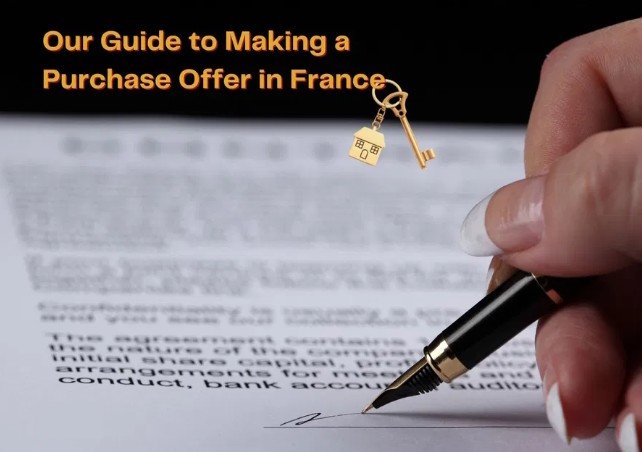
41What is a notaire in France?
A notaire is a public legal officer authorized to prepare and authenticate important legal documents, including real estate transfers.
In a property transaction, the notaire is responsible for essential legal checks, preparation of the authentic deed, collection of relevant taxes, and registration formalities.
The notaire's role differs from that of a real estate agent or independent property advisor.
Copy link to this answer42Can the buyer appoint their own notaire?
Yes. You can appoint your own notaire even if the seller already has one. When two notaires handle the ordinary conveyancing, they generally share the regulated remuneration rather than charging two complete sets of it.
Separate advice or additional work may involve other charges, so request a breakdown. Choose someone comfortable with international buyers and your ownership circumstances. The notaire remains a public legal officer with duties toward the transaction; appointing your own does not replace independent litigation, tax, or technical advice where needed.
Copy link to this answer43Does the notaire inspect the property's physical condition?
Not as a substitute for a building surveyor or technical inspector.
The notaire's primary responsibilities concern the legal transaction.
Physical defects, renovation requirements, structural concerns, and building-system conditions may require separate technical assessments.
Copy link to this answer44What is a power of attorney in a French property transaction?
A procuration, or power of attorney, authorizes another person to carry out specified legal actions on behalf of the buyer.
It can be useful when an international purchaser cannot attend a signing in France.
The notaire will determine the required form, identity checks, and any authentication or legalization procedures.
Copy link to this answerAcquisition Costs, Taxes, and Ownership Expenses
- What are the total costs of buying property in France?
- How much are notaire fees in France?
- Who pays the real estate agency commission in France?
- What is taxe foncière?
- What is taxe d'habitation?
- What are condominium charges in Paris?
- Can a condominium require owners to contribute to major renovation projects?
- Are nonresident property owners taxed in France?
- What taxes apply when selling a French property?

45What are the total costs of buying property in France?
Build an all-in budget, not just a purchase-price budget. Include:
Transfer taxes, land-registration charges, notaire remuneration, and disbursements.
Selling-agency commission if not already included in the quoted price, plus any separate buyer-agent fee.
Loan arrangement costs, security costs, borrower insurance, and any broker fee.
Technical assessments, translations, currency conversion, and transfers.
Renovation, furnishing, moving expenses, and a contingency reserve.
Then calculate annual taxes, insurance, utilities, maintenance, condominium charges, and loan payments. Clarify which amounts are already included to avoid double-counting.
Copy link to this answer46How much are notaire fees in France?
“Notaire fees” is shorthand for acquisition costs, most of which are taxes and charges rather than the notaire’s own remuneration. Existing-home purchases are commonly budgeted at around 7–8%, but the precise percentage depends on the price, location, and transaction. A blanket estimate can understate a particular purchase.
The 2025 transfer-tax increase brought ordinary acquisition costs in the Paris region close to 8%; qualifying first-time buyers purchasing a principal residence are excluded from that increase. Certain qualifying new-build transactions commonly have acquisition costs around 2–3%, with VAT treatment affecting the overall budget. Request a transaction-specific quotation. Sources: Paris Notaires — acquisition tax changes; Notaires de France — reduced acquisition costs.
Copy link to this answer47Who pays the real estate agency commission in France?
The responsibility depends on the listing arrangement and contractual terms.
Agency fees may be stated as payable by the seller or buyer.
Where an independent buyer's agent is engaged separately, that professional's remuneration is governed by the applicable buyer mandate and legal requirements.
Buyers should clarify all fees before signing an agreement.
Copy link to this answer48What is taxe foncière?
Taxe foncière is an annual local property tax. The owner on 1 January is generally liable to the tax authority for that year. Sale contracts commonly require the buyer to reimburse a prorated share, but this contractual allocation does not change who owes the tax to the authority.
Request the latest notice and ask about exemptions or changes that may not continue after purchase. A previous bill is a budgeting reference, not a guarantee of future charges. See Service Public — taxe foncière.
Copy link to this answer49What is taxe d'habitation?
Taxe d’habitation has been abolished for principal residences, but furnished second homes can still attract it. Liability depends on the premises and your situation on 1 January; a municipal surcharge may apply.
An overseas owner should not assume a French holiday home qualifies as a principal residence. Obtain a local estimate and check the separate rules for vacant properties where relevant. See Service Public — second home residence tax.
Copy link to this answer50What are condominium charges in Paris?
Most Paris apartments are located in buildings governed by a copropriété ownership structure.
Owners contribute to the maintenance and management of shared parts of the building.
Charges may cover cleaning, common-area electricity, building insurance, elevators, heating systems, management, and other collective expenses.
The amount varies substantially between buildings.
Copy link to this answer51Can a condominium require owners to contribute to major renovation projects?
Yes. Co-owners fund their shares of properly approved common-building works, which can be substantial. Read meeting minutes, voted budgets, the maintenance record, any multi-year works plan, and outstanding calls for funds.
Ask the notaire who is legally liable for each payment call and what reimbursement the sale agreement provides between buyer and seller. The date works were voted does not alone determine every payment responsibility. Include likely future roof, facade, lift, and energy works in your budget.
Copy link to this answer52Are nonresident property owners taxed in France?
Nonresident ownership can create French obligations for local taxes, rental income, a future sale, and property-occupancy declarations. Your home country may also require reporting; tax treaties do not remove every obligation.
French real estate wealth tax (IFI) may apply when net taxable French real estate holdings exceed €1.3 million, subject to treaty rules and the treatment of debts and indirect holdings. This is not a threshold based solely on one home’s purchase price. Obtain cross-border advice for your full circumstances. See French tax administration — nonresident real estate wealth tax.
Copy link to this answer53What taxes apply when selling a French property?
A sale can trigger French capital-gains tax and social levies, with treatment affected by residence, holding period, exemptions, and the nature of the property. A home does not become exempt merely because it was your only French property.
Nonresident sellers may also need a fiscal representative in some circumstances. Ask the notaire and a cross-border tax adviser to estimate the liability before setting your net sale-price target. Check home-country reporting and any treaty relief separately.
Copy link to this answerProperty Inspections and Building Conditions

54Are property inspections mandatory in France?
Sellers are generally required to provide specified technical diagnostic reports, depending on the property.
These are assembled in the Dossier de Diagnostic Technique (DDT).
However, the French diagnostic system is not identical to a comprehensive North American home inspection.
Buyers may choose to commission additional specialist inspections.
Copy link to this answer55What is included in the Dossier de Diagnostic Technique?
The Dossier de Diagnostic Technique contains the reports legally required for that property. Depending on its age, location, and installations, these can cover energy performance, lead, asbestos, gas, electricity, termites, environmental risks, and noncollective sanitation.
Other sale documents may include the applicable floor-area measurement and, for certain poorly rated houses or single-owner residential buildings, a regulatory energy audit. The audit is distinct from the DPE and does not apply to every condominium apartment. Check validity dates, the property inspected, and the findings with your notaire and technical adviser.
Copy link to this answer56What is a DPE energy rating?
The Diagnostic de Performance Énergétique (DPE) gives an A-to-G energy classification incorporating energy consumption and greenhouse-gas emissions. Review the complete report, its validity, and any official updated certificate rather than relying on the letter in an advertisement. Calculation rules have changed, so an older advertised rating may need checking.
For relevant principal-residence and mobility leases in metropolitan France, the minimum energy standard excludes G-rated homes for leases signed, renewed, or tacitly renewed from 2025, then F from 2028 and E from 2034. A sale is not generally prohibited solely because of a poor rating. Check the rules for your intended use and whether improvements require common-building work. Sources: Service Public — energy performance diagnostics; Service Public — rental housing standards.
Copy link to this answer57Should I commission an additional building inspection?
An independent technical assessment can be particularly valuable when purchasing an older property, a house, or an apartment requiring renovation.
Depending on the circumstances, buyers may wish to investigate:
Structural condition
Moisture and water infiltration
Roofing and facade issues
Heating and ventilation
Electrical and plumbing systems
Windows and insulation
Estimated renovation costs
Additional inspections help identify risks that may not be fully addressed by mandatory diagnostics.
Copy link to this answer58What should I investigate before buying an apartment in a Paris condominium?
Evaluate the building as carefully as the apartment. Request the condominium rules, recent general-meeting minutes, charges, voted works, financial information, maintenance records, and applicable building energy documents or works plans.
Check for arrears, disputes, roof or facade repairs, lift costs, and restrictions affecting renovation or rental use. Compare the legally measured private area with the marketed area, especially for attic spaces and converted rooms. Ask which documents must be provided before the withdrawal period can start.
Copy link to this answer59Can I renovate a property in France?
Usually, but permissions depend on the work. Changes to structure, common parts, external appearance, or use can require condominium and municipal approval. Protected buildings and heritage areas may have additional controls.
Before buying a renovation project, obtain written feasibility advice, realistic quotations, and a schedule that includes approvals. For a house, also check planning rules, boundaries, access, drainage, and sanitation. Confirm contractors’ relevant insurance and the legal status of previous works; an attractive design proposal is not permission to build.
Buying from abroad or considering a renovation? Discuss your search and inspection priorities with SHOKO.
Copy link to this answerChoosing the Right Property and Location
- Which Paris neighborhoods are popular with international buyers?
- Is it better to buy a renovated apartment or a property requiring work?
- How important is natural light when buying an apartment in Paris?
- Should I avoid ground-floor apartments?
- How important is public transportation access?
- What should buyers consider about future resale value?

60Which Paris neighborhoods are popular with international buyers?
Start with daily life and budget rather than a list of “best” arrondissements. Saint-Germain-des-Prés in the 6th may suit buyers seeking central cultural life; parts of the 7th offer quieter residential streets near major landmarks. The 8th mixes homes, offices, and shopping, while the 16th has residential areas near substantial parks.
Le Marais, spanning parts of the 3rd and 4th, and neighborhoods in the 9th, 11th, and 17th offer different settings. Each arrondissement varies street by street. Visit at different times and compare noise, services, transport, building condition, and prices. Explore our Paris neighborhood guides.
Copy link to this answer61Is it better to buy a renovated apartment or a property requiring work?
Both can be appropriate.
A renovated apartment may provide immediate comfort and reduce the complexity of moving into a new country.
A property requiring renovation may offer opportunities for customization, but buyers must carefully assess construction costs, permits, project management, and potential delays.
The purchase price should be evaluated together with the total expected cost of making the property suitable for its intended use.
Copy link to this answer62How important is natural light when buying an apartment in Paris?
Natural light is a major consideration for many buyers.
Orientation, floor level, window placement, courtyard configuration, and surrounding buildings can significantly influence the brightness of an apartment.
Higher floors may offer better light and views, although elevator access and roof conditions should also be considered.
Copy link to this answer63Should I avoid ground-floor apartments?
Not necessarily.
Ground-floor properties can offer convenient access and may suit buyers with mobility considerations.
However, buyers should evaluate privacy, security, natural light, street noise, moisture, and resale appeal.
Every property should be assessed individually.
Copy link to this answer64How important is public transportation access?
Paris has an extensive public transportation network.
Convenient access to metro, RER, buses, and regional rail services can influence daily quality of life and property desirability.
International buyers should also consider access to airports, schools, healthcare facilities, shopping, and their regular destinations.
Copy link to this answer65What should buyers consider about future resale value?
Important considerations include:
Neighborhood desirability
Purchase price relative to comparable properties
Building maintenance
Floor level and elevator availability
Natural light and layout
Energy performance
Noise and surrounding environment
Condominium financial health
Future renovation requirements
Even when purchasing a personal residence, resale considerations can help protect long-term flexibility.
Copy link to this answerRelocation, Lifestyle, and Property Ownership

66Is buying property easier than renting for international residents?
Buying and renting solve different problems. Rental applications can be challenging without familiar income documents or a suitable guarantee, but buying requires substantial capital and creates transaction costs and ownership responsibilities.
Renting first may be useful while testing a neighborhood, confirming relocation plans, or arranging financing. Buying can provide control and a stable base if your likely holding period and finances support it. Compare the two using total costs, flexibility, and your plans rather than treating ownership as an automatic solution to a difficult rental application.
Copy link to this answer67Can buying property help me relocate to France?
A home can give you a stable base, space for belongings, and greater control over your accommodation. It does not by itself establish immigration status or settle your tax residence.
Plan the purchase alongside visa eligibility, healthcare, schooling where relevant, banking, and tax advice. Ownership may support practical accommodation arrangements, but it does not guarantee a successful visa application. See France Visas — long stay visas.
Copy link to this answer68Can I rent out my French property when I am not using it?
Possibly, but verify the specific rental model before buying. Long-term rentals must meet housing standards and may be subject to rent controls. Tourist rentals face different registration, authorization, tax, insurance, and condominium rules.
In Paris, tourist letting of a genuine principal residence is generally capped at 90 days a year. That allowance does not authorize tourist letting of a second home: the city requires additional approvals, including change-of-use authorization with compensation, from the first day. Do not base your purchase budget on holiday-let income without confirming feasibility. Read the City of Paris — tourist rental rules.
Copy link to this answer69Is home insurance required in France?
Insurance requirements depend on the ownership and occupancy arrangements.
For condominium properties, owners generally have legal obligations concerning civil-liability coverage.
Mortgage lenders may also impose insurance requirements.
Appropriate home insurance can provide protection against events such as water damage, fire, theft, and liability, depending on the policy.
Copy link to this answer70What happens to my French property if I pass away?
French property creates estate-planning questions across borders. The civil law governing succession and the taxes payable are separate issues. Under the European succession framework applied in France, habitual residence is generally central, and a valid choice of nationality law may be possible; cross-border exceptions and family protections need specialist review.
Ask your notaire to consider your will, marital property regime, co-ownership arrangements, heirs, and taxes in each relevant country. An SCI or a foreign will does not automatically eliminate French inheritance issues. See Paris Notaires — international succession.
Copy link to this answerStarting Your Property Search with SHOKO
- How does SHOKO help international buyers begin their search?
- Can SHOKO help buyers who are still living in Canada or the United States?
- Can SHOKO assist buyers interested in several Paris arrondissements?
- Can SHOKO help coordinate communications with French agencies?
- Does SHOKO replace the notaire, mortgage broker, or technical inspector?
- When should I contact SHOKO?

71How does SHOKO help international buyers begin their search?
Begin with your intended use, preferred areas, all-in budget, funding, essential property features, and timing. SHOKO can help translate those priorities into a practical search brief and compare properties against it.
The initial discussion should also define the service area, mandate, fees, and specialists you may need. Schedule a private consultation to discuss your starting point.
Copy link to this answer72Can SHOKO help buyers who are still living in Canada or the United States?
Yes. Research, initial comparisons, agency communications, and suitable viewing arrangements can be coordinated while you remain abroad, within the agreed service scope.
Remote support does not replace technical inspections or the notaire’s identity and signing requirements. Establish who will visit properties, how findings will be documented, and which decisions require your direct approval. Read about support for American and Canadian buyers.
Copy link to this answer73Can SHOKO assist buyers interested in several Paris arrondissements?
Yes. A buyer's search does not have to be limited to a single neighborhood.
Comparing several arrondissements may help identify the most appropriate balance between lifestyle, property characteristics, and budget.
Copy link to this answer74Can SHOKO help coordinate communications with French agencies?
Yes. Coordinating communication across multiple agencies is one of the practical benefits of an organized buyer-focused search.
This can help reduce duplicated inquiries, clarify listing information, and streamline viewing arrangements.
Copy link to this answer75Does SHOKO replace the notaire, mortgage broker, or technical inspector?
No. Each professional has a distinct role.
SHOKO's buyer-focused property advisory services complement the work of notaires, financing specialists, surveyors, tax advisors, and other qualified professionals.
Legal, tax, lending, and technical determinations remain the responsibility of the appropriately qualified professionals.
Copy link to this answer76When should I contact SHOKO?
Contact SHOKO before an intensive search, ideally after outlining your budget and intended use. Early coordination can help you identify financing questions, compare areas, and avoid spending time on properties outside your requirements.
If you have already found a property, explain the current stage and any approaching deadline so the available support can be assessed. Discuss your property search with SHOKO.
Copy link to this answerPlan Your Purchase with SHOKO
A well-prepared search connects the property you want with a budget, lawful intended use, and a contract you understand. Before making an offer, clarify funding, acquisition costs, building risks, and the checks still required.
SHOKO can help organize your search and coordinate the next steps within the agreed scope. Share your preferred locations, all-in budget, intended use, financing position, and ideal timeline.
Schedule a private consultation
For funding questions, explore French mortgage financing for Americans and Canadians. Learn more about SHOKO’s buyer advisory services or contact SHOKO.